
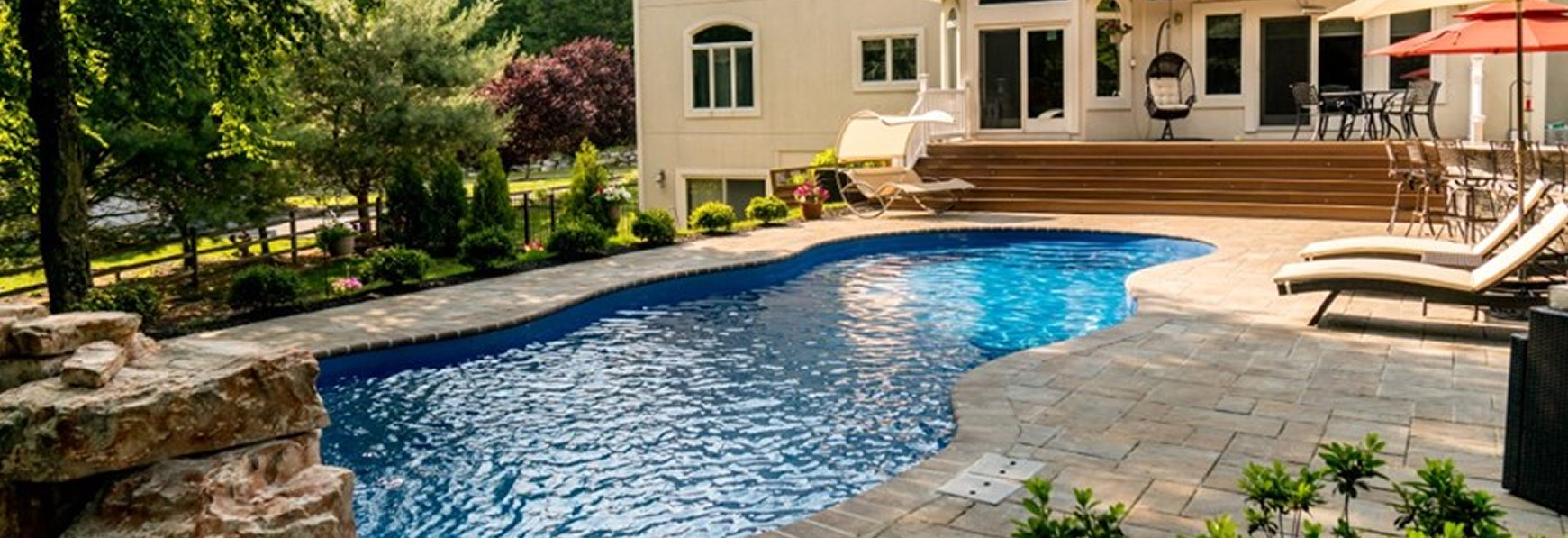
Which Pool Is Right for Your Yard?
Most homeowners assume concrete is the "real" pool and fiberglass is the shortcut. It isn't — they're two different construction methods, and the right one depends on your yard, your timeline, and how you want to spend the next fifteen summers. Here's an honest look at both.
Fiberglass Pools:
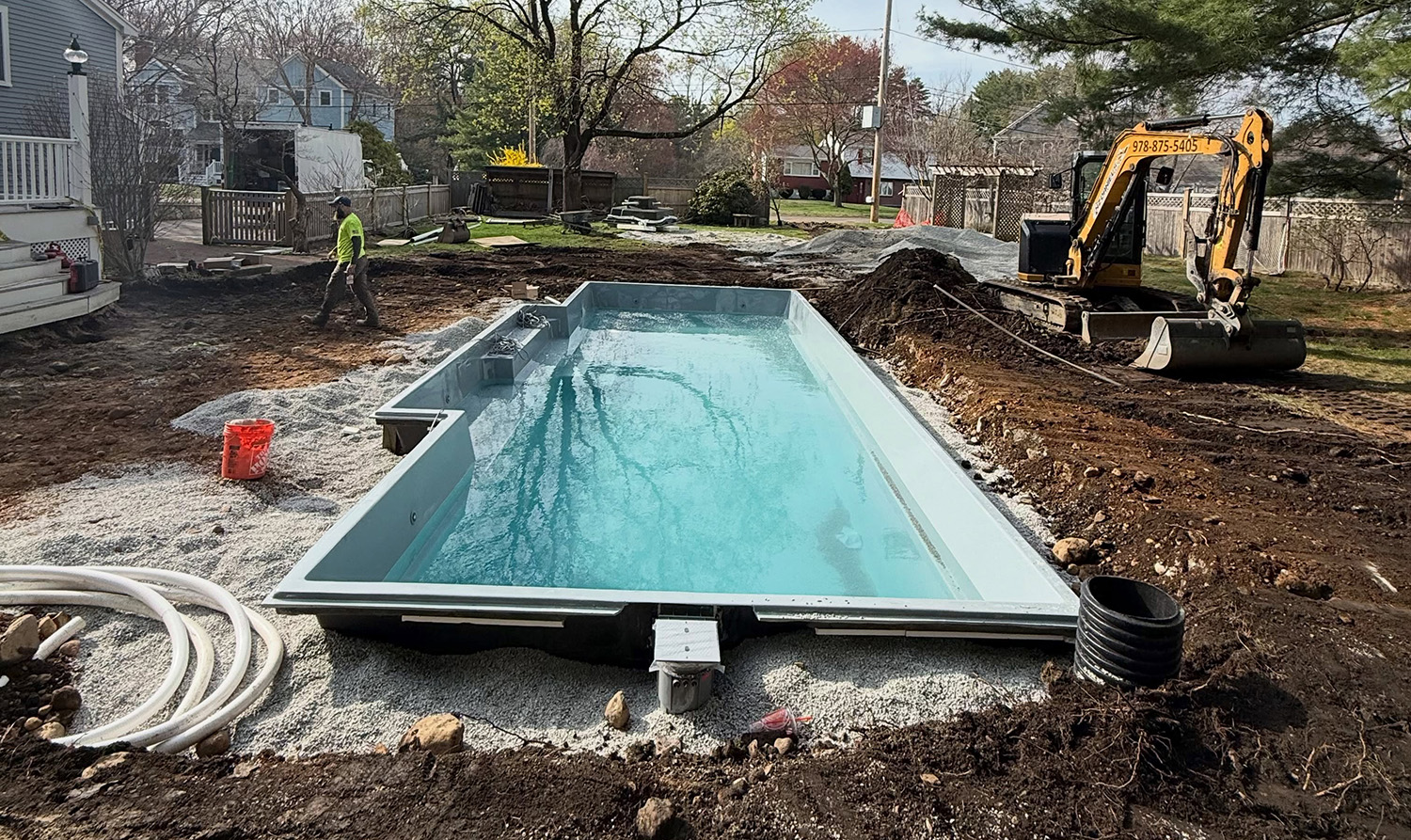
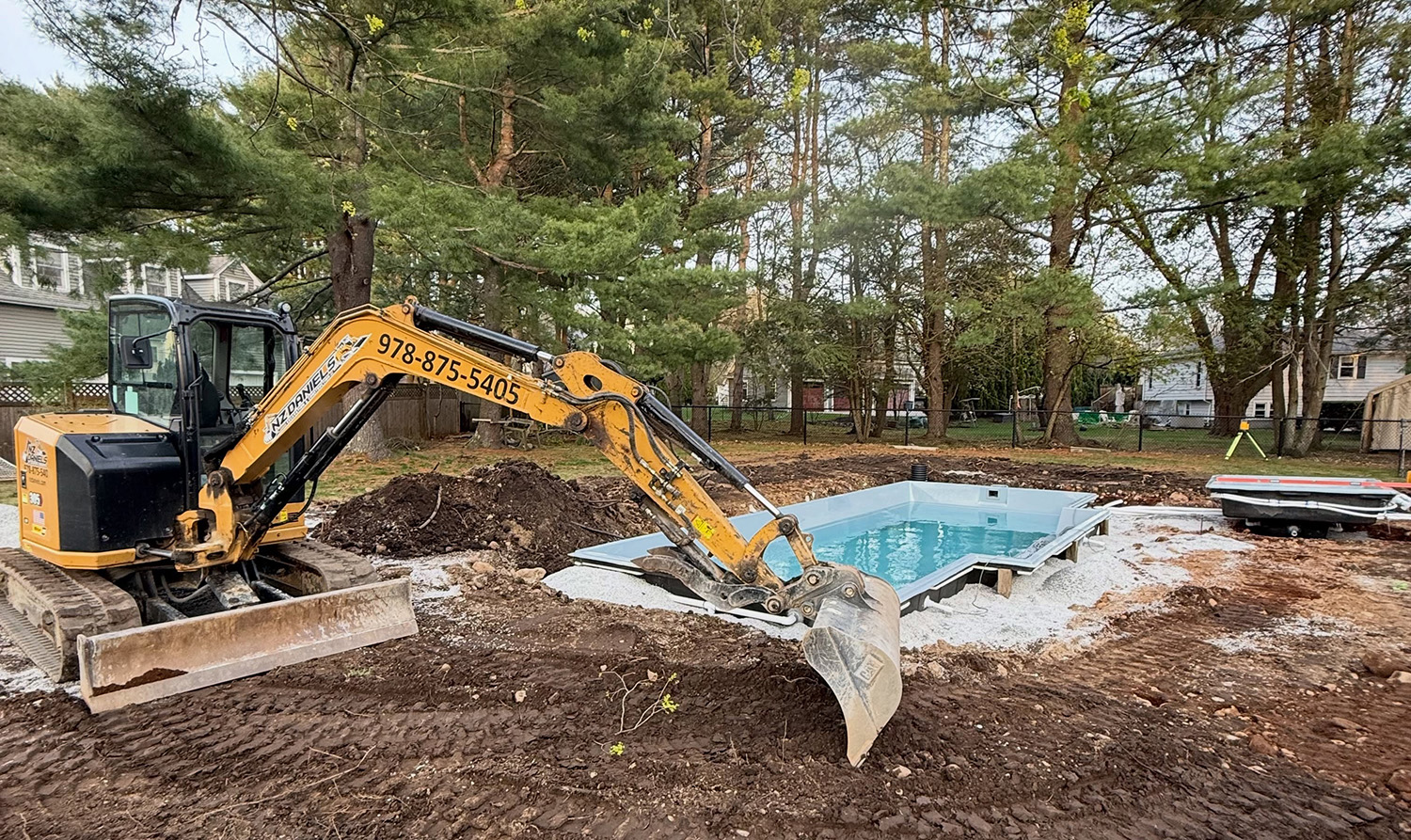
- Pre-built shell for quick installation
- Minimal on-site construction
- Typically completed in about one week
- Smooth gelcoat surface — no scraped feet, easy on swimsuits
- Non-porous surface resists algae, so less brushing and fewer chemicals
- No resurfacing, ever — and no liner to replace
- Steps, benches, tanning ledges and spas are molded into the shell at no extra cost
- Compatible with salt systems
- Lower cost of ownership over 10+ years
- Flexes slightly — handles New England freeze-thaw well
- Manufacturer-backed structural warranty
Concrete Pools:
- Built entirely on-site
- Can last decades with regular resurfacing
- Requires steel reinforcement, concrete application, and curing
- Installation time ranges from 2 to 3 months
- Fully custom — any shape, any size, any depth
- Rough, porous surface that needs brushing 2–3× a week
- Resurfacing every 7–15 years
- Higher chemical and energy use
- Every feature (bench, ledge, steps) is formed on site at added cost and time
- Not ideal for salt systems
- Rigid structure — more vulnerable to cracking if site work is wrong
When Concrete Is the Better Choice
We install fiberglass, so you'd expect us to say it always wins. It doesn't. If you want a shape nothing in the catalog matches, a pool bigger than a shell can be trucked, or a built-in architectural feature like a vanishing edge — that's concrete, and we'll tell you so.
The Pool Type Matters. The Installation Matters More
Here's What Most Comparisons Leave Out: The most expensive pool problems in New England have little to do with fiberglass versus concrete. They come from the ground underneath. Bad backfill, a base that wasn't right, drainage sending water where it shouldn't — those will ruin either kind of pool. NZD came to pools from excavation, so we read the site first, and the site work is ours, not a subcontractor's.